
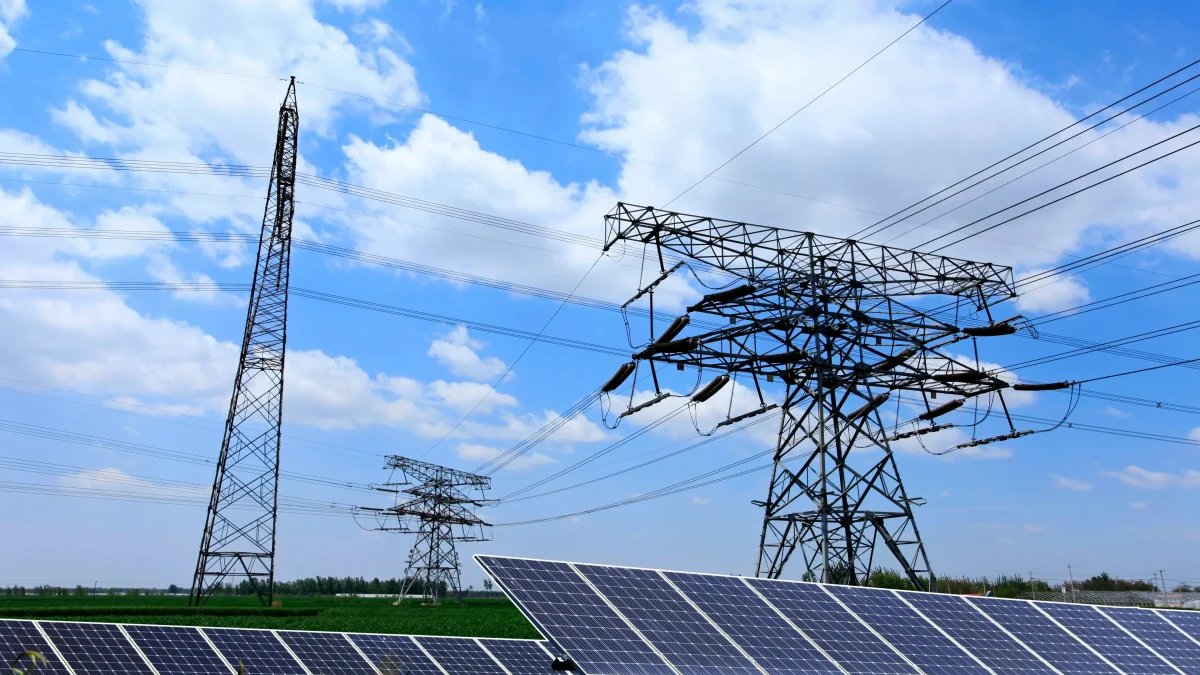
The challenges of the energy transition: will the 2050 goals be met?
September 30, 2026
Chile’s path to electrifying its energy matrix is advancing decisively, but it still faces challenges in extending its impact to key industries and economic processes that continue to rely on fossil fuels.
On its path toward meeting its 2050 energy and carbon-neutrality targets, Chile is making significant progress in incorporating renewable energy into the power system. However, it now faces the challenge of using that energy efficiently and increasing electrification to replace fossil fuels, in order to definitively transform its energy matrix.
“The progress is very significant because it confirms that renewable energy already plays a structural role in the Chilean power system. As of August 2026, non-conventional renewable energy (NCRE) has reached a 42.5% accumulated share of power generation,” said Ana Lía Rojas, executive director of the Chilean Association of Renewable Energy and Storage (Acera).
According to the association’s registry, there are already 20,923 MW of installed NCRE capacity, equivalent to 52.3% of total capacity. “These figures show the magnitude of the transformation our power system has undergone. This progress makes the integration challenges more visible,” Rojas said, adding that as of August 3,014 GWh of NCRE energy had been curtailed—3.5% less than in the same period of 2025—”but which still reflects a significant amount of renewable energy that could not be incorporated into the system.”
Despite the progress, she warned, the 2030 and 2050 targets depend on transmission, flexibility, electrification, and demand advancing in step in order to take advantage of the growing renewable supply.
For Romina Gaete, associate partner of climate change and sustainability services at EY, the challenge is shifting from incorporating renewable energy to integrating it efficiently into the system. “Greater penetration of sources such as solar and wind requires advancing simultaneously in transmission, storage, and flexibility, and the long cycles of planning and developing new transmission infrastructure reinforce the need to anticipate the future needs of the grid today,” she noted.
42.5% was NCRE’s share of local power generation accumulated as of August of this year.
23% of the country’s energy consumption corresponds to electricity.
Electrifying the economy
Rodrigo Barraza, director of the Energy Transition Center at Universidad Adolfo Ibáñez, warns that the challenge toward 2050 is using clean electricity to replace fuels in transport, industry, mining, and heating and cooling, along with improving energy efficiency. “Chile has a particularly advanced position in electricity matters, but it still faces a considerably more complex second stage: transforming the rest of the energy matrix,” he said.
The economy must be electrified, Rojas affirmed. She noted that electricity represents around 23% of the country’s consumption, and that roughly 63% of the energy matrix still depends on fossil fuels.
“The International Energy Agency’s roadmap indicates that, to achieve carbon neutrality, that share would need to reach approximately 55% by 2050. In other words, the power system would not only have to decarbonize—it would have to grow to supply a much larger share of the country’s energy needs,” Barraza warned. This implies advancing in electromobility, the electrification of industrial and mining thermal processes, heat pumps, and other uses currently supplied by fuels.
“Depending on the process, the alternatives may include energy efficiency, solar thermal energy, biomass used with high-standard emissions-control technologies, and, for certain applications that are difficult to electrify, low-emission fuels,” he said.
The National Electric System indicates that decarbonizing is a task that requires safely integrating renewable energy, “based on a future scenario in which there could be some hours of the day when 100% of demand is supplied with these technologies,” said Rodrigo Espinoza, operations manager of the National Electric Coordinator.
Gaete indicates that the urgency lies in ensuring that transmission, storage, regulation, and electricity demand grow in a coordinated way. “In fact, among the energy priorities announced for the second half of 2026 are precisely the electrification of consumption, the integration of storage, the strengthening of transmission, and the modernization of electricity distribution.”
Where to advance
For Espinoza, the contribution of renewable energy should not be evaluated solely by installed capacity, but also by how it integrates into the system, where it is located, what storage duration it offers, and what control, frequency-regulation, and voltage-support services it can provide. “Storage, together with a robust transmission network and renewable resources with advanced control capabilities, will be key to maintaining the security and quality of the system,” he said.
“The big question in the coming years is no longer just how much renewable energy we can produce, but how we manage to bring that clean energy competitively and safely to activities that today still depend on fuels,” Barraza emphasized—which for him is a prior step to replacing all fuels with electricity.
Courtesy of Diario Financiero