International seminar: Chile already generates clean electricity, the challenge now is to use it across the economy
October 23, 2026
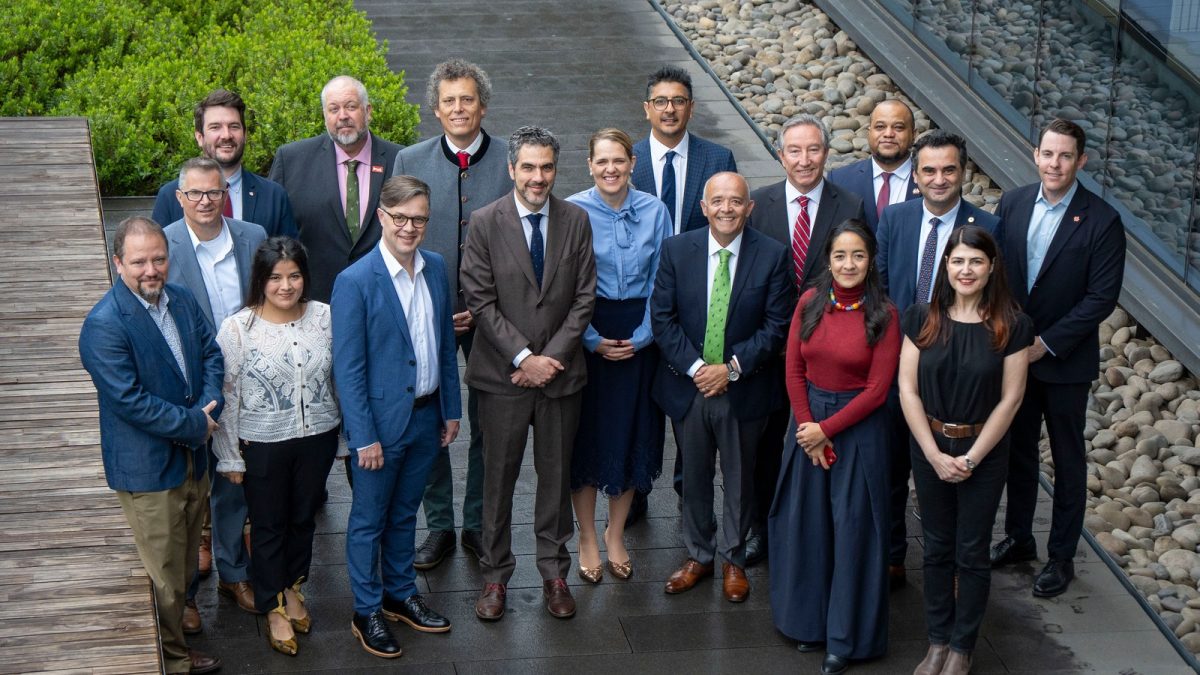
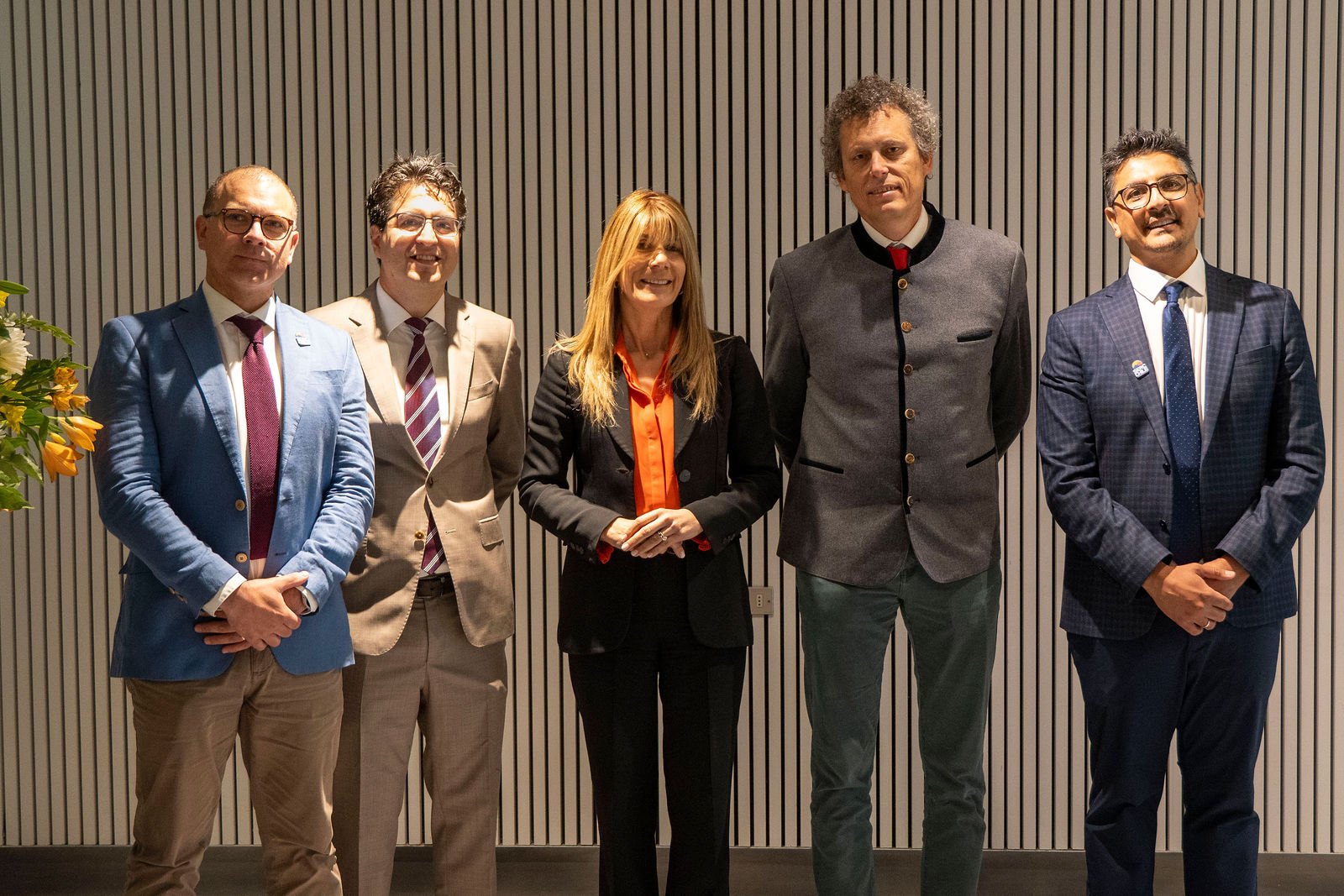
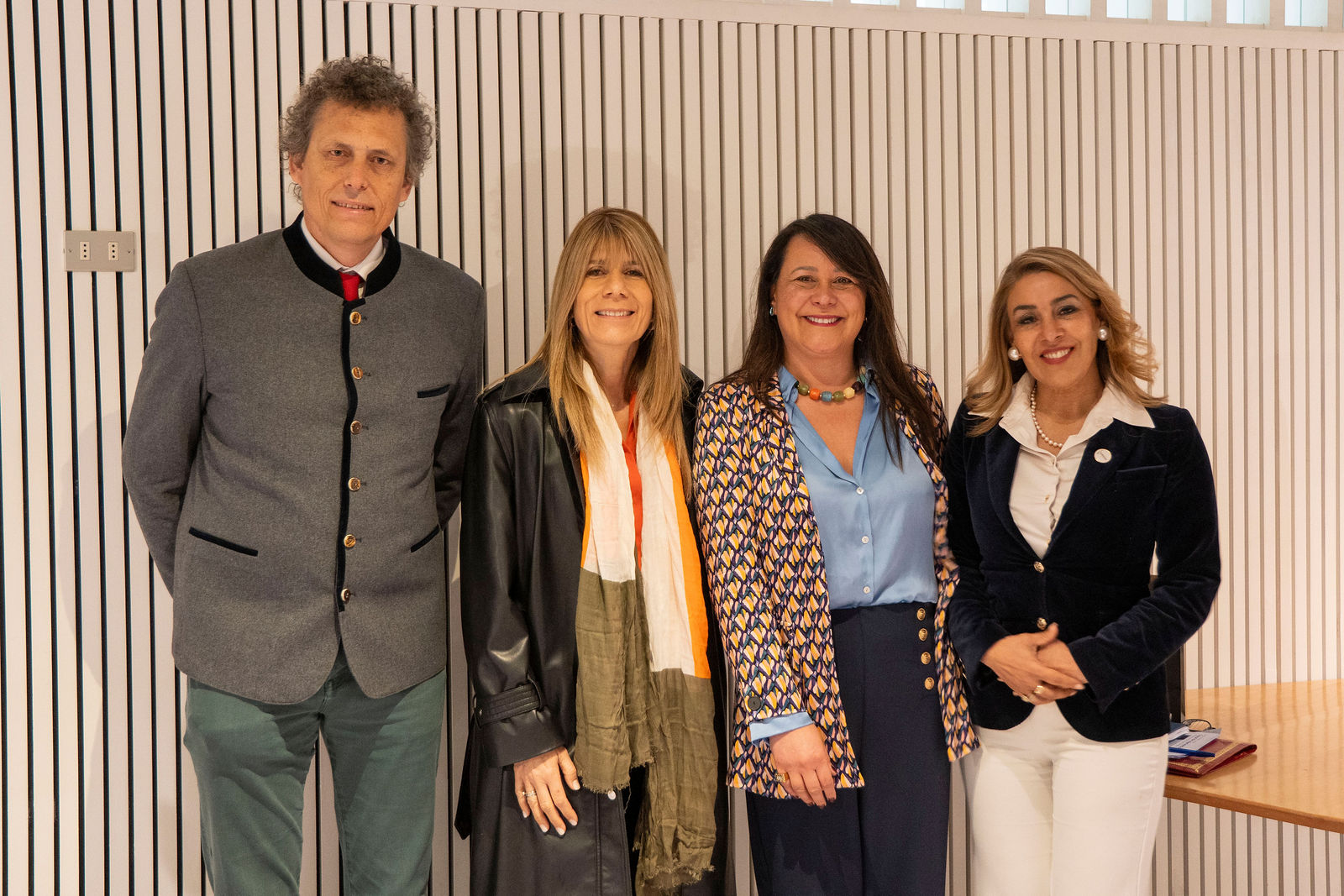
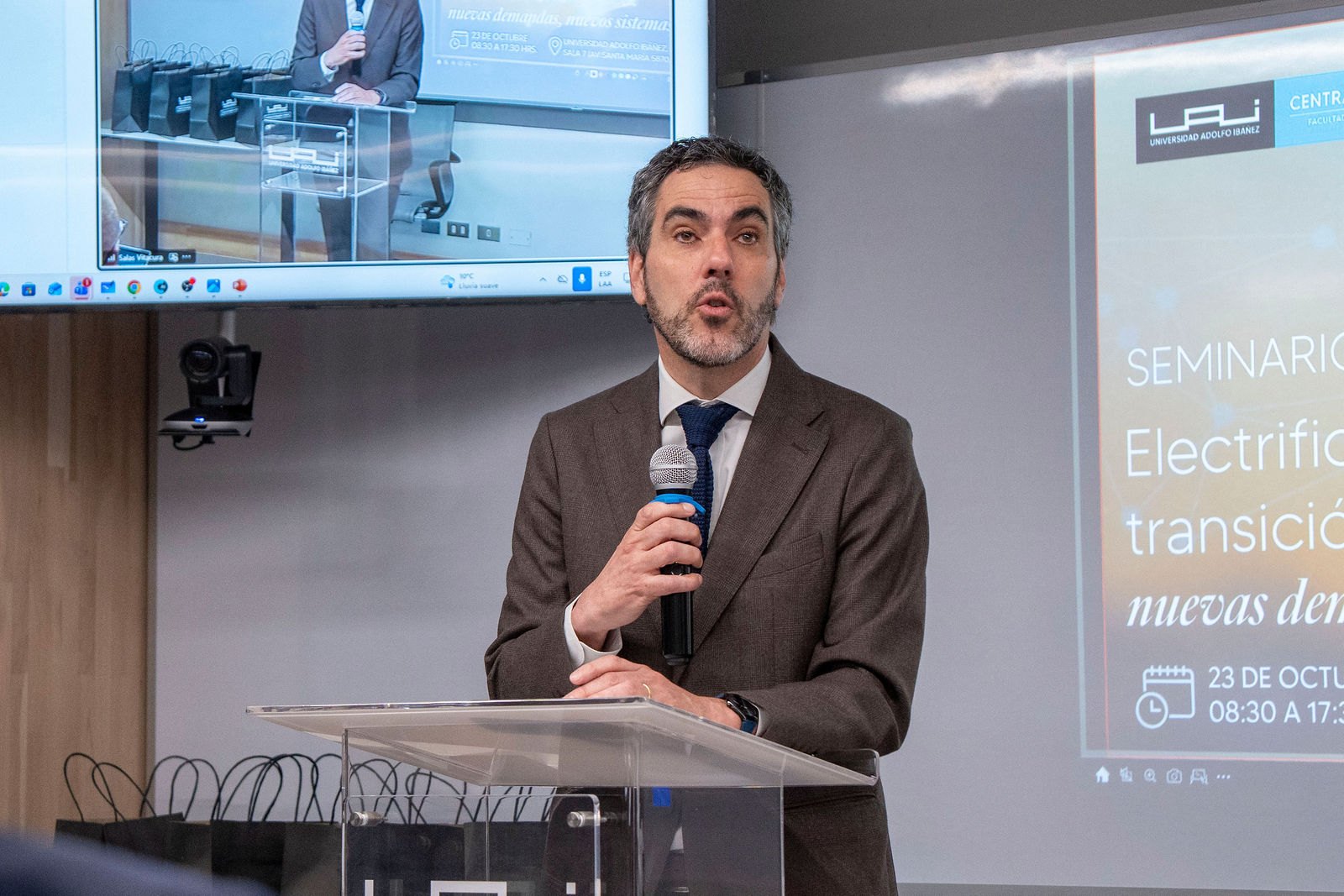
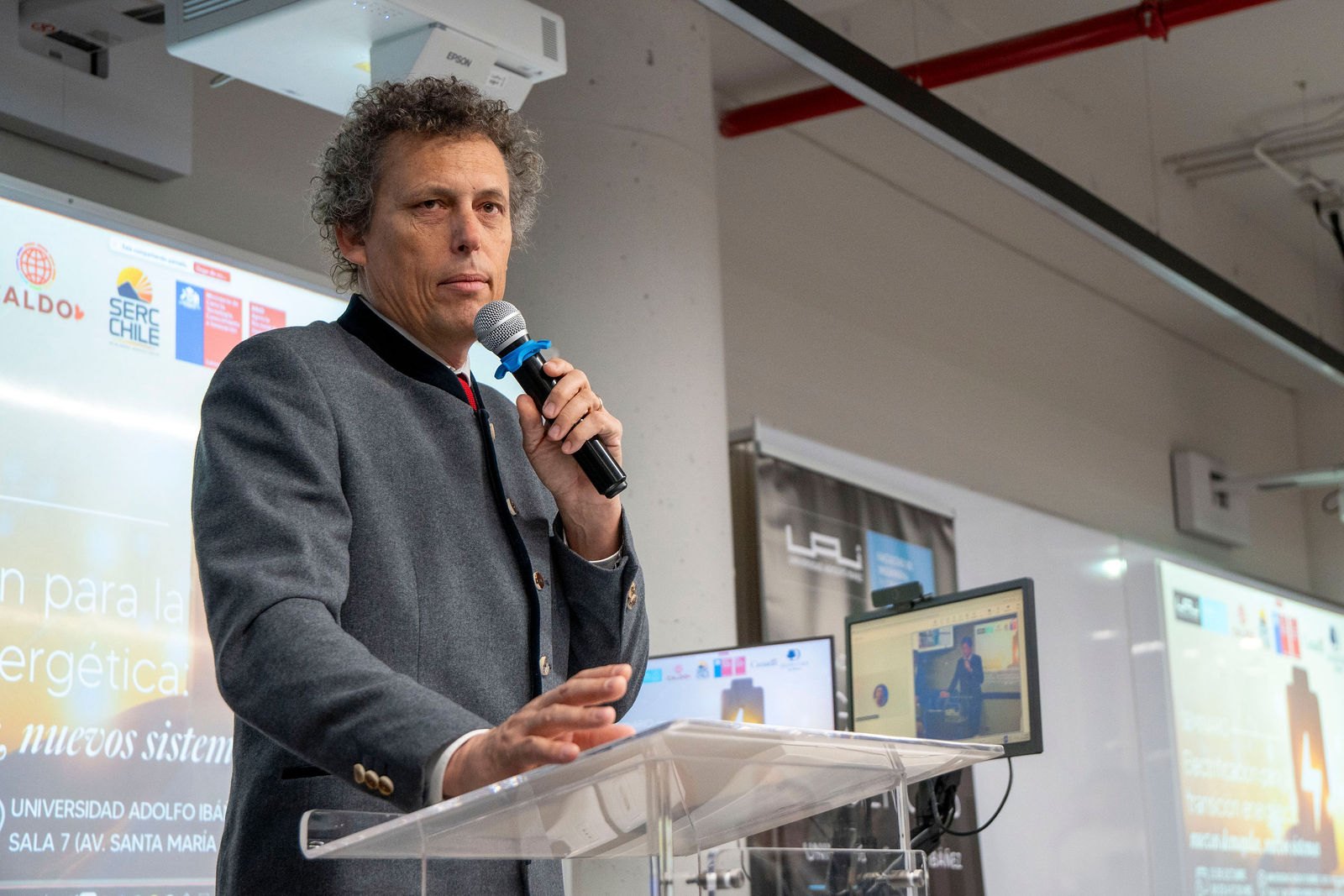
Chile has already shown it can generate clean electricity; now it has to use it across its whole economy. That idea ran through the international seminar “Electrification for the Energy Transition: New Demands, New Systems”, which on Friday, October 23, brought together authorities, academia and industry from Chile and Canada at the Vitacura Campus of Universidad Adolfo Ibáñez. It was organized by the UAI Faculty of Engineering and Sciences, the UAI Center for Energy Transition (CENTRA), CALDO, the consortium of Canadian research universities, and SERC Chile, in collaboration with ANID and the Embassy of Canada. The day featured presentations in Spanish and English.
The diagnosis was shared: electricity accounts for roughly a quarter of the energy Chile consumes, while the National Energy Policy estimates that reaching carbon neutrality requires that share to rise to around 60%. Closing that gap calls for tariffs that reflect renewable abundance, grids built ahead of demand and, above all, rebuilding public trust.
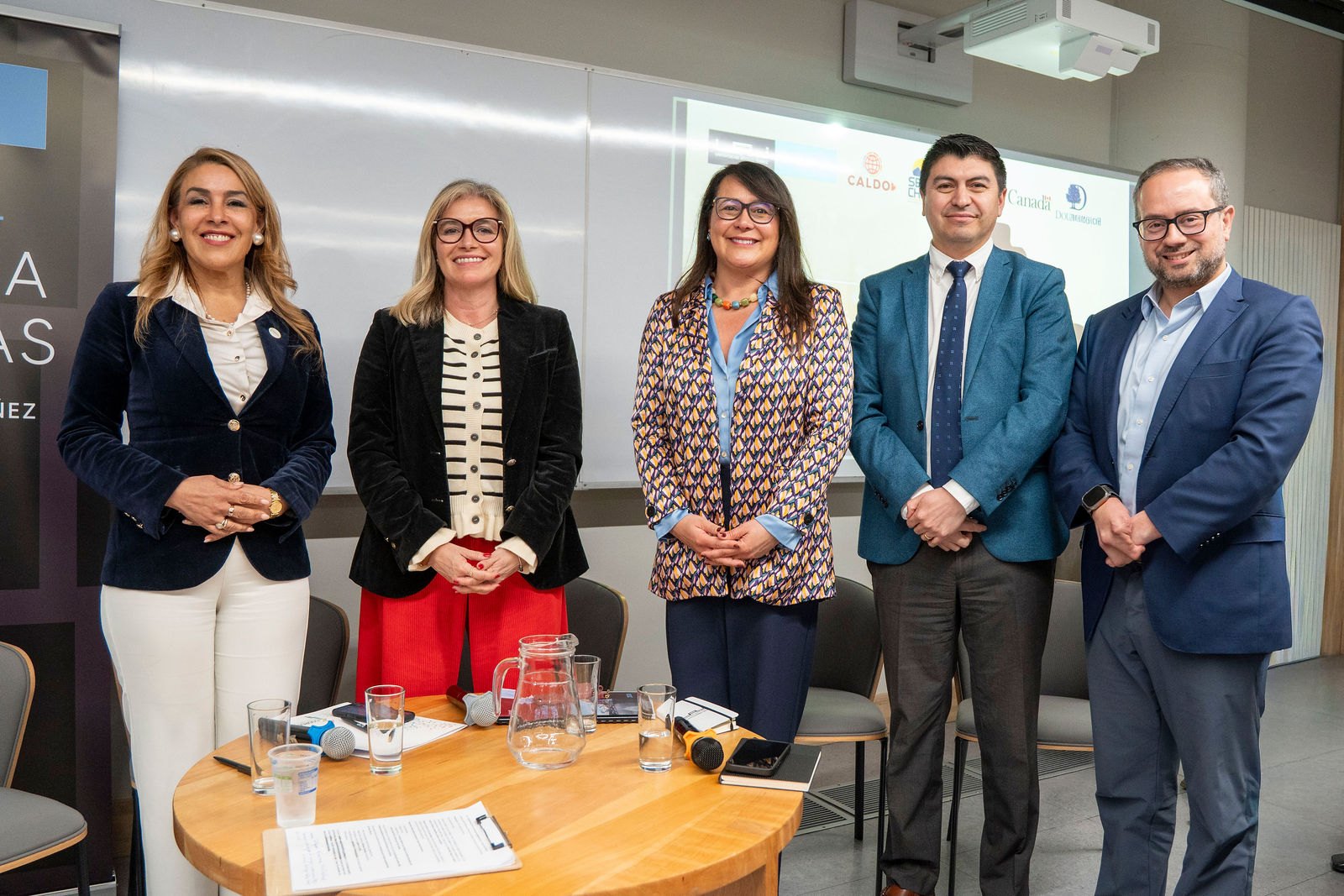
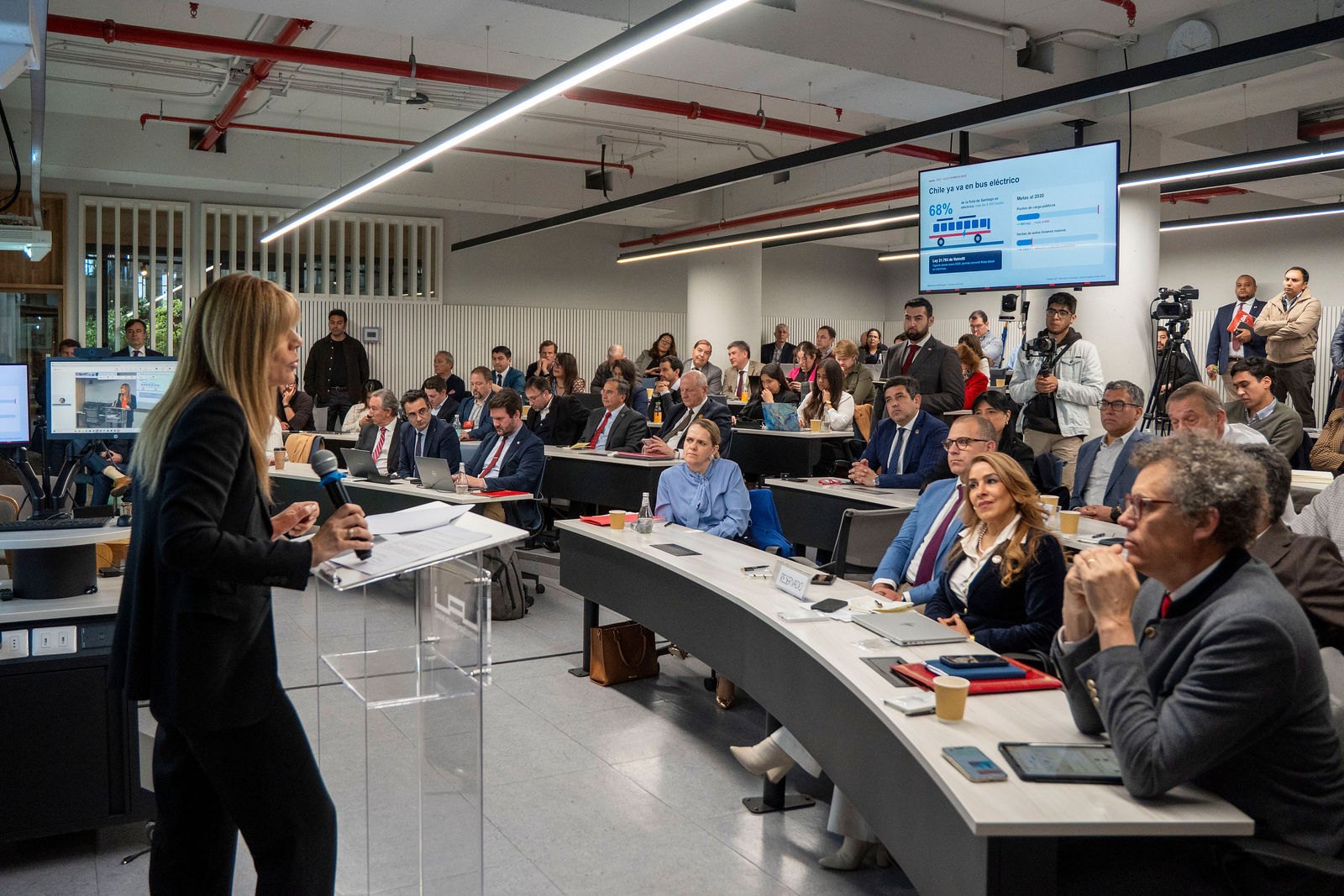
Opening: from producing clean energy to transforming the economy
Claudio Seebach, Dean of the UAI Faculty of Engineering and Sciences, recalled that a decade ago, as head of the generators’ association, the question was already what the future uses of electricity would be. What he studied in the 1990s, he said, “became the star product, it seems, of 21st-century energy”, and he highlighted Canada as a partner in science and industry.
Rector Francisco Covarrubias framed the new stage:
“At this stage the question is not only how to produce clean energy, but how to use it to transform our economy, strengthen competitiveness and create new high value-added industries.”
Francisco Covarrubias, Rector of Universidad Adolfo Ibáñez
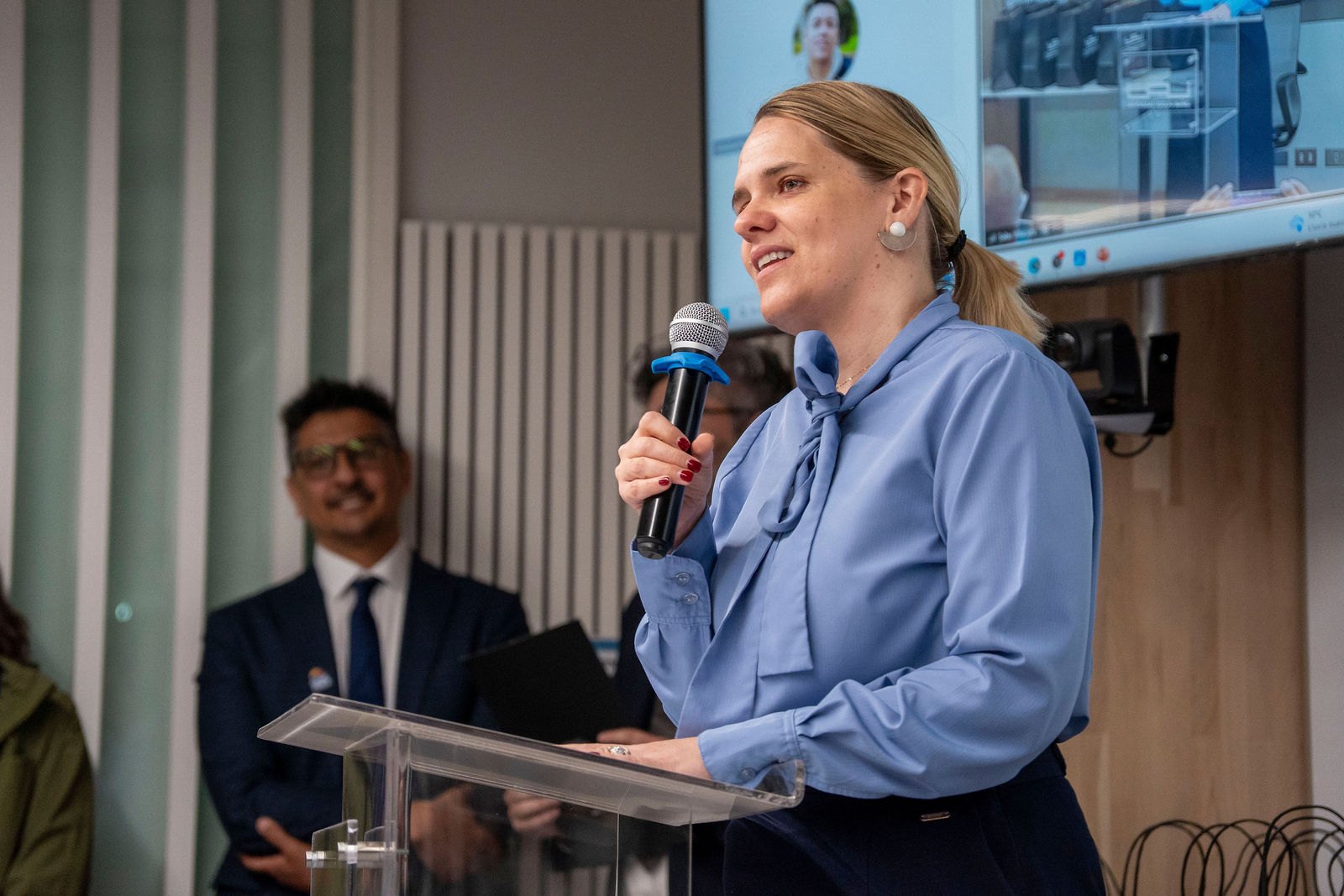
Karolina Guay, Ambassador of Canada to Chile, linked electrification to the future of sustainable mining and critical minerals, noted that Canada is the leading foreign investor in Chile and that next year marks 30 years of the free trade agreement between both countries. “No country, no organization alone can face these energy transition challenges by itself,” she said.
The Minister of Energy: integrate, store and electrify
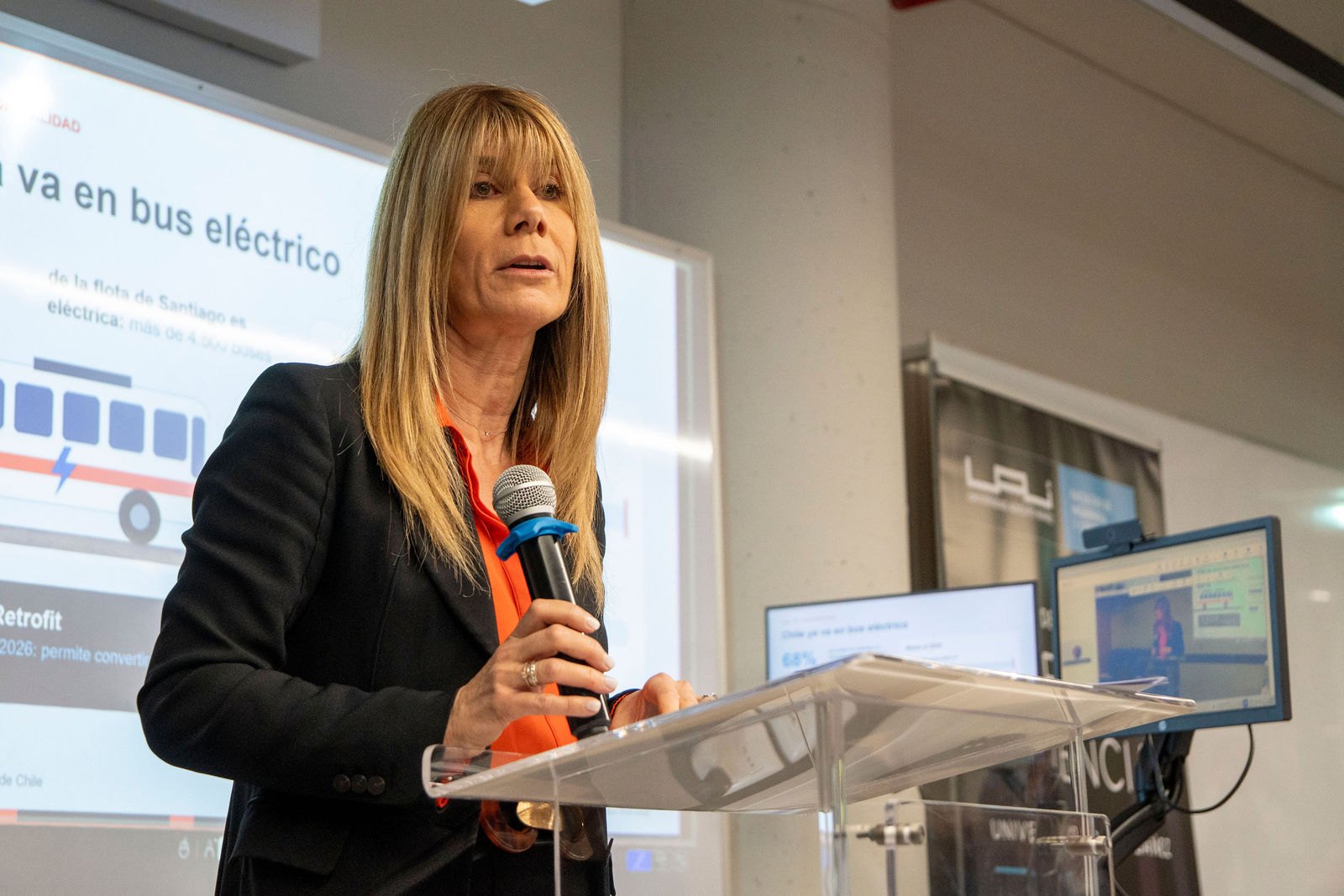
Ximena Rincón, Minister of Energy, presented the 2026 to 2030 agenda, which she called the second stage of the transition. About two thirds of the electricity generated in 2025 was renewable, with a record 93% at noon on November 17, yet the energy the country uses is still mostly fossil. In 2025 about 6,000 GWh of renewable energy were curtailed, “what almost 3 million customers consume in a year,” she explained. The three challenges she set out are to integrate (grids and transmission), to store (Chile already has a pipeline of more than 10,000 MW of storage) and to electrify transport, heat, industry, mining and new digital demand.
The Minister announced that the conceptual proposal for the reform of the electricity grids, whose legal framework is 44 years old, will be ready in December or January, and highlighted the contribution of academia: “One of the three reports underpinning our reform was prepared by CENTRA at this university, together with ISCI and the Energy Center of Universidad de Chile, with the National Energy Commission.”
“Chile has already shown that it can generate clean energy. Now we have to show that we can use it everywhere: in every bus, every home, every school, every mining site.”
Ximena Rincón, Minister of Energy
Panel 1: public policies to accelerate electrification
Warren Mabee, Queen’s University (Canada), spoke remotely about this year’s disruption of the oil market. He warned that, in such crises, governments tend to respond with short-term measures that preserve the status quo, and that this is the main risk to meeting medium and long-term climate goals.
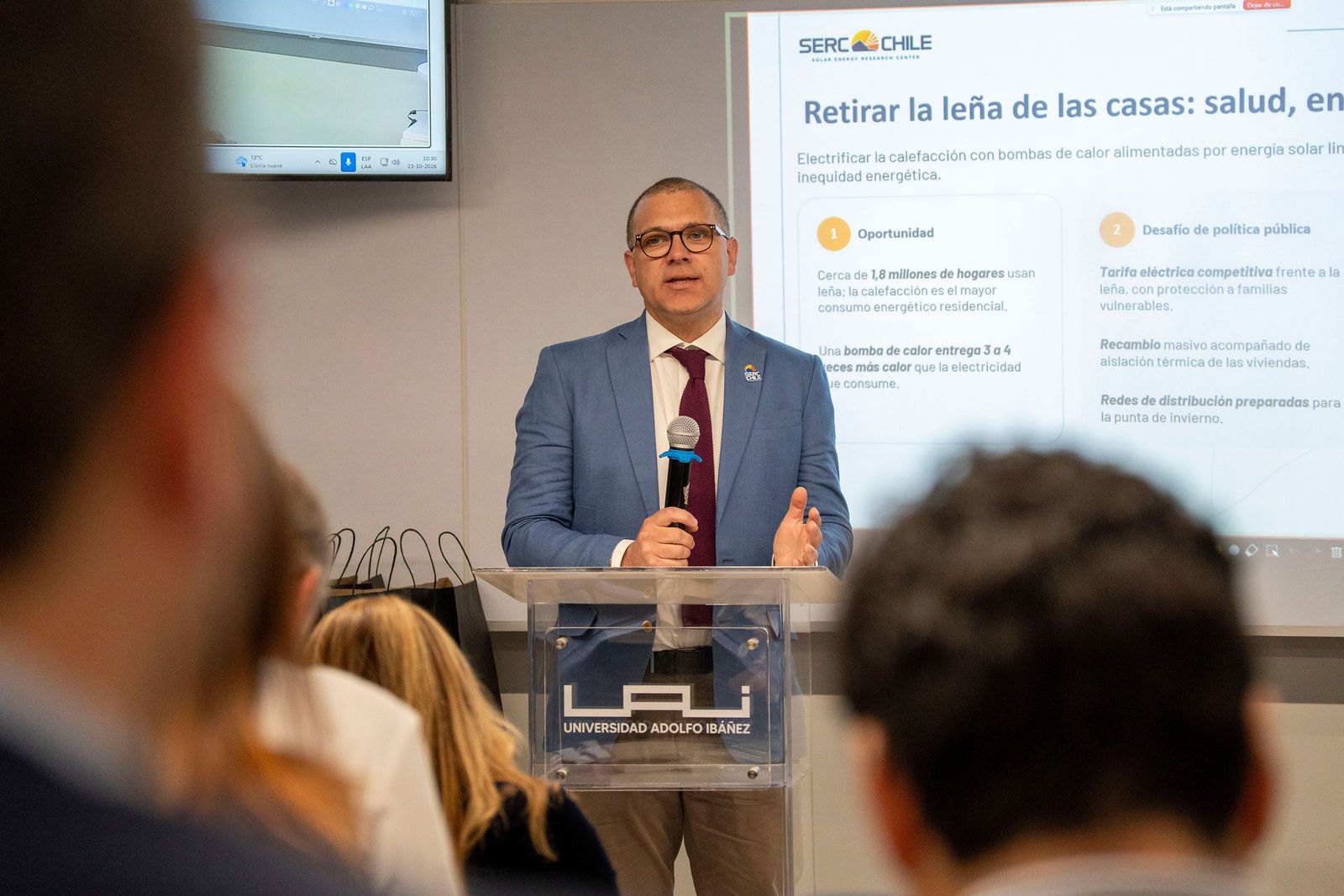
José Miguel Cardemil, Director of SERC Chile, showed that solar radiation in Santiago exceeds that of southern Spain, yet solar energy is a tiny share of total consumption: “Being the sunniest country in the world, we are using it for only 5% of all our energy uses.” He focused on industrial heat, which accounts for more than half of the energy used by Chilean industry, and on the 1.8 million households that still heat with firewood.
The panel, moderated by Rodrigo Barraza, Academic Director of CENTRA, discussed why the country has not moved faster. Marta Cabeza, Superintendent of Electricity and Fuels, put end users at the center: they expect public policy to deliver “what is very hard to put on the table, which is trust”, and she noted that the regulator receives around 100,000 complaints a year. Former Minister of Energy Claudio Huepe cited Energy Transition Observatory data showing that 80% of people have little or no trust in electricity companies, and called for “avoiding the technocratic temptation”. Ignacio Santelices, Fundación Chile, proposed correcting the distortions that today penalize higher electricity use and warned that “the regulator will have to be brave”. Francisco Alliende, CEO of Saesa, pointed to time-of-use tariffs and service quality as conditions for people to electrify.
Ana Lía Rojas, Executive Director of ACERA, summed up her proposal in two words, target and price: a target of 35% electricity in the energy mix by 2035, and cost-reflective tariffs that pass solar abundance on to bills. She also highlighted the electrification potential study commissioned by ACERA from UAI, ISCI and the Regulation and Competition Center of Universidad de Chile, which will measure that potential by industry, segment and subsector.
“Storage, a structural piece of the power system, changes everything and will keep changing everything.”
Ana Lía Rojas, Executive Director of ACERA
Panel 2: energy markets for an electrified future
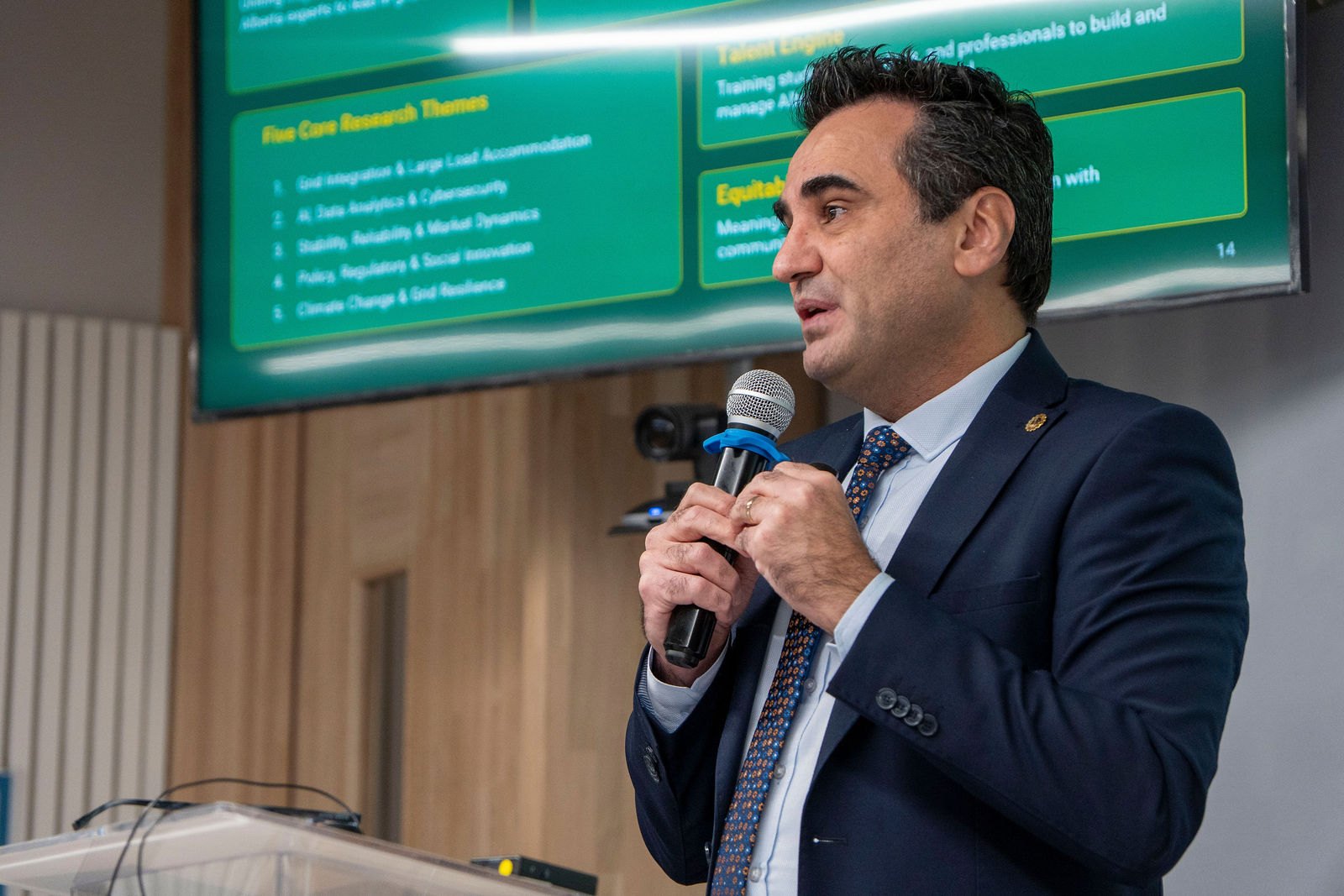
Mustafa Gül, University of Alberta (Canada), compared both systems: Alberta and Chile have power demand of similar size, but Chile’s renewable share exceeds 60%, against about 22% in Alberta. He presented a pilot community that will operate as a virtual power plant in that province, and the Canadian instruments available to collaborate with universities and industry from other countries.
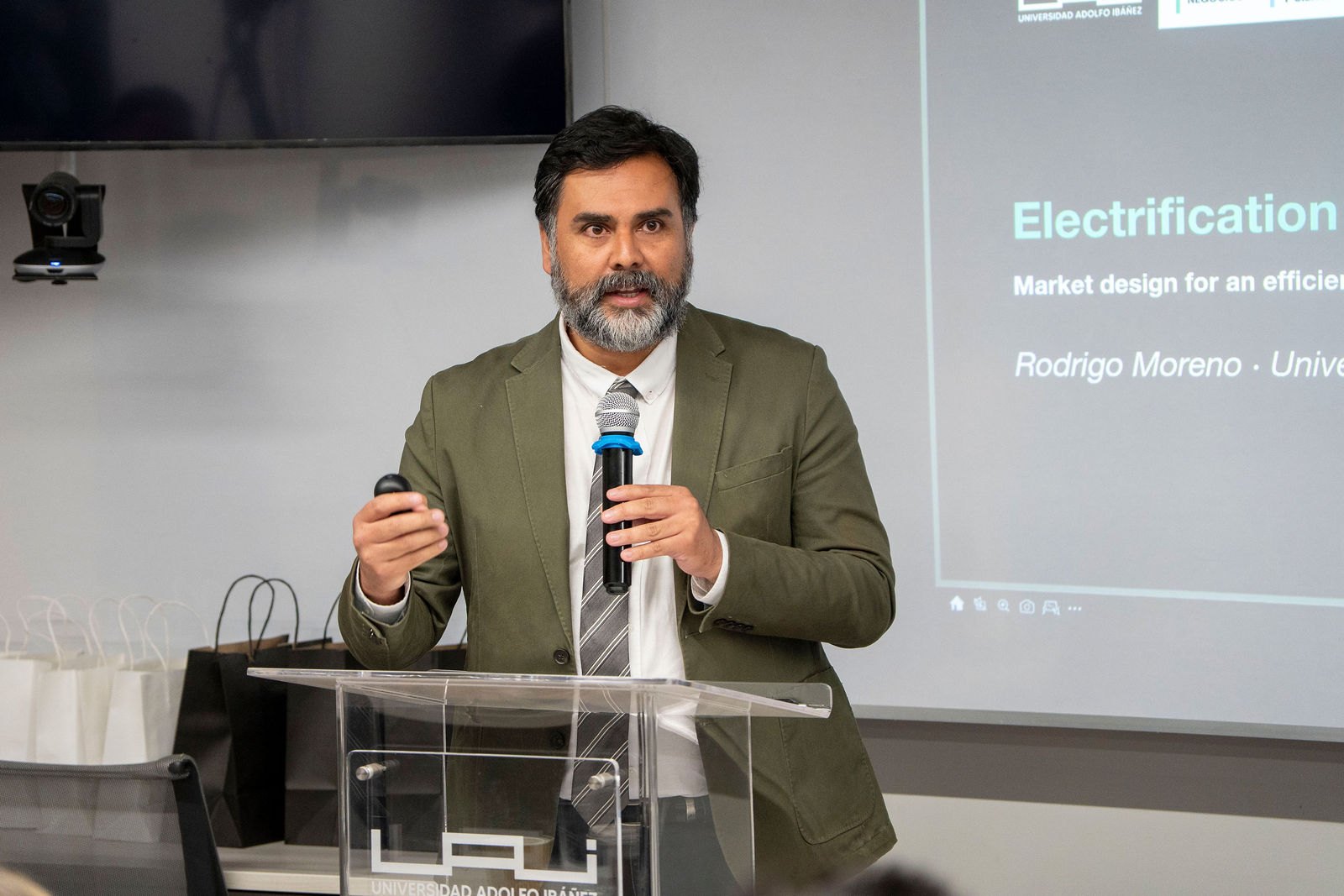
Rodrigo Moreno, Director of the UAI Energy Engineering program and CENTRA researcher, started from the premise that electrification is efficiency and argued that grids must be built before demand arrives. A study by his team for the Ministry of Energy estimated that electrifying with flexible demand saves around US$2 billion a year.
“If we are reactive, if we wait for the requirement and then take our time to build grids, this equation simply does not add up. The only way to anticipate is to take risk.”
Rodrigo Moreno, Director of UAI Energy Engineering and CENTRA researcher
In the panel, moderated by Andrea Armijo, Director of CIGRE Chile, María Teresa González, CEO of Statkraft Chile, said the country “has moved from competing for installed megawatts to competing for something more sophisticated” (flexibility, location and value capture), and warned that without visible benefits for people, electrification becomes a problem of social legitimacy. Bernardita Espinoza, Vice President of the Board of the National Electricity Coordinator, explained that today’s market was designed for large generators and passive consumers, that the Coordinator has proposed moving to a bid-based market, and that “system security is everyone’s task”.
Miguel Castillo, CGE, described distribution as the industry’s face to the public (“for a distribution company, your best result is a draw”) and pointed to grids that have not changed in two decades while electric cars and heat pumps are on the agenda. Darío Morales, Executive Director of ACESOL, called for changing the question: not how the grid supplies users, but “how users get cheaper and more reliable energy use, consumption and supply”, with rules for aggregators and retailers and symmetric treatment of those who consume and those who inject.
“Distribution reform is the missing enabler for the energy transition to reach every household in this country.”
Miguel Castillo, Commercial and Customer Service Deputy Director at CGE
Key takeaways
The gap is in use, not in generation. Electricity is about a quarter of the country’s energy consumption, and the long-term goal points to more than double that. Power demand did not grow last year.
Price and tariffs. There was agreement that renewable abundance must reach bills through time-of-use, cost-reflective tariffs, with a level playing field between fossil fuels and electricity.
Timely grids. Distribution reform and anticipatory transmission planning emerged as the enabling condition for everything else.
Flexibility and storage. Batteries already supply much of the peak, and flexible demand can reduce the investment needed in grids and storage.
Trust. Authorities, industry associations and companies agreed that without concrete, tangible benefits for people, electrification will not move forward.
In closing, Andrea Armijo put it this way: “Chile has had clean power generation for a long time. The next step is for us to agree, and truly agree.”
Afternoon workshop
The day continued with a specialized workshop on research perspectives on electrification and the global energy transition, with presentations by Claudio Agostini (UAI and SERC Chile), Mustafa Gül, Warren Mabee, Guillermo Jiménez (Universidad de los Andes, Colombia) and Balaji Venkateswaran (University of Cyprus), and Tito Homem-de-Mello (UAI) as panelist. It was moderated by Shahriyar Nasirov, faculty member of the Faculty of Engineering and Sciences and SERC Chile researcher.
Recording
The full recording of the seminar is available on the CENTRA UAI YouTube channel.
More information on the seminar page of the Faculty of Engineering and Sciences.