Verónica Diaz
 Sistemas Multienergéticos
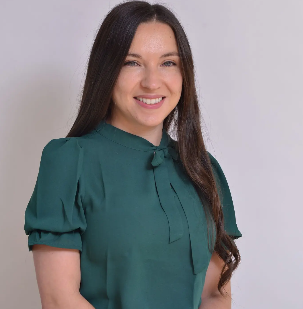
Verónica Díaz Gómez is an Industrial Civil Engineer from the University of Antofagasta and obtained her PhD in Engineering Systems in 2020 from the University of Chile. She joined the Faculty of Engineering and Sciences at Adolfo Ibáñez University (UAI) in 2022, after having taught courses in areas ranging from marketing and business to operations and applied econometrics at the universities where she studied.
Her research focuses on Marketing Analytics, where she seeks to apply statistical models along with data science to optimize decision-making. She has worked on the study of consumer behavior, specifically analyzing the effects of pregnancy on women’s purchasing habits, but she has also addressed customer segmentation, conjoint analysis, and Machine Learning models to model choices in purchasing decisions, exploring how consumers filter information when choosing different products.
The motivation behind her research stems from the real impact it can have on decision-making in companies and organizations, the dynamism of Marketing Analytics with the emergence of new technologies, and the opportunity to train professionals prepared to face these changes. Furthermore, the intersection of theory and application drives her to continue exploring new methodologies and relevant problems.
Verónica has numerous publications in scientific journals and articles presented at conferences in countries such as the United States, Greece, Ireland, Italy, and Peru. She was also the director of the Center for Studies and Development of Teaching Activity in Engineering (EADI) at the University of Antofagasta, as well as co-director of various CORFO projects related to entrepreneurship training. Currently, she is the principal investigator of the FONDECYT project “The Effect of Pregnancy and Childbirth on Consumption Behavior.”
Throughout her professional career, she has also served as a thesis advisor for postgraduate students, an opportunity that has been extremely enriching. For Verónica, mentoring has been a mutual learning experience, where her students’ questions and perspectives enrich her own research and strengthen the connection between theory and practice. Furthermore, working with undergraduate students has shown her the importance of flexibility and continuous professional development in teaching, motivating her to adapt to their needs and learning styles.