Energy: The lever the world is asking us to activate
May 27, 2026
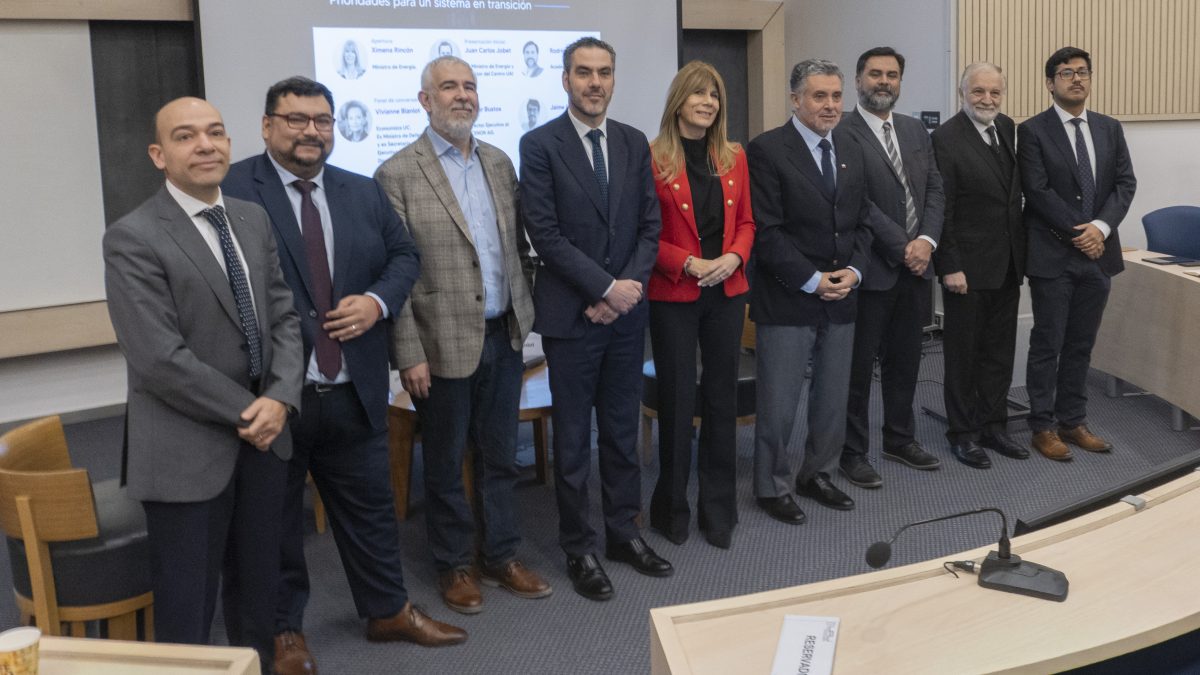
A few weeks ago, the Adolfo Ibáñez University (UAI) held the seminar “Electricity Regulation Reform: Priorities for a System in Transition,” an event that brought together a series of experts from the academic, public, and private spheres to discuss the future of the electricity sector in Chile.
The rector of UAI, Francisco Covarrubias, opened the seminar with an image that ended up setting the tone for the entire day: the reflection on energy dates back to Aristotle, for whom energy was act (actuality), the full realization of a capacity or potency (potentiality), distinct from mere movement. The Minister of Energy, Ximena Rincón, took up the idea: if we all put the act, not the movement, into our work, the results would be tremendously different. That difference between potency and act well summarizes the current moment of the Chilean electricity sector. The capacity exists; what is missing is converting it into realization.
The war in the Middle East revives a well-known lesson: depending on fuels whose flow passes through a handful of geographical straits, produced by a small group of countries, and with volatile prices, is not a good long-term bet. Added to this is the fertilizer crisis, which is already straining food chains, and the sustained pressure to decarbonize.
The flip side is the opportunity. Chile has one of the largest reserves of renewable generation in the world. Close to 70% of the installed capacity of the electricity system is renewable; the country will close this year with more than 2 GW of storage and adds nearly 13,000 MW of solar power, equivalent to the system’s maximum demand, with zero variable cost. The Red Movilidad (Mobility Network) already exceeds 4,000 electric buses in Santiago, making up around 62% of the fleet. Every electron that replaces imported fuel shields the economy from external shocks.
Furthermore, a second layer of opportunity was proposed: stop transporting fuels to industries and start moving industries to where the energy is. Green steel, fertilizers, synthetic fuels, hydrogen, and desalination for mining. An agenda that converses naturally with copper and lithium mining, essential inputs for the global transition.
On the other hand, the SAIDI—average hours per year without supply per customer—hovers between 10 and 15 hours, compared to minutes in OECD countries, even those with a comparable per capita GDP. The origin is rarely in generation: it is the transmission and, above all, distribution networks that fail. Greater electrification of the economy requires a higher quality of service.
The blackout on February 25, 2025, put a metric on the cost to the country: estimated losses by Acenor of around US$500 million, a figure that subsequent academic analyses suggest is even higher. Added to the tariff errors and surcharges detected in 2024 and 2025, they left the sector in the headlines for the wrong reasons and eroded public trust.
What is notable about this moment is that there is an agreement. Three independent roundtables—the Crecer con Energía (Grow with Energy) cycle of the SEDE UAI-Icare Center, the Committee of Experts convened by Biminister Álvaro García, and the group from the Enlace Center with CENTRA UAI—arrived at very similar diagnoses. The Minister summarized them into four pillars:
-
First, reliable tariffs. The last distribution process was delayed by 43 months and left a debt exceeding US$800 million that must be resolved in Congress today. Without organizing that situation, there is no political space for structural reforms.
-
Second, supply quality and resilience. The national goal is 3 hours of interruption per year in 2035 and 1 hour in 2050. The gap is enormous.
-
Third, system security. With high variable renewable penetration and more intense climatic events, ancillary services need adequate economic signals. “The security of supply must be an unwavering principle,” was the minister’s summary.
-
Fourth, unblocking investment. Energy projects with favorable environmental resolutions went from taking an average of 577 days in 2022 to 672 days in 2025.
For experts, the core of the reform lies in distribution. The current regulation dates back more than four decades and operates under the “efficient model greenfield company” scheme: every four years, the regulator imagines a company starting from scratch with the best available technologies to minimize costs, thereby determining tariffs without recognizing legacy assets or specific investments that were made, for example, for resilience reasons. The result is a powerful incentive not to invest, even when the investment would improve quality. Vivianne Blanlot recalled that the sector has been discussing this reform since the year 2000, accumulating frustration over the inability to advance.
There is a myth worth dismantling: the idea that reforming distribution could raise tariffs. Quantitative models and international experience point in the opposite direction. Electrification distributes the cost among more consumers, and a scheme based on real assets—where amortized assets leave the base—puts downward pressure on tariffs and forces companies to invest. Which is exactly what the system needs.
As the discussion panel concluded, the challenge now is who will be responsible for electrifying the country and materializing what appears to be a major agreement. The temptation, in politically charged periods, is to postpone the structural issues and manage the immediate situation. But in energy, nothing is built in four years: today’s decisions set the trajectory for the next decade. Returning to the image of the rector and the minister, Chile’s potential (potency) in energy is enormous. The act is missing. And the world, this time, is not waiting for us.