
Cooling Without Plugging In: The Solutions Emerging to Combat Extreme Heat
March 2, 2026
Turning the roof into a thermal ally is one of the strategies to face rising temperatures without increasing electricity consumption.
The planet is facing a new era of extreme heat. A report from the World Meteorological Organization (WMO) warns that Earth could record five consecutive years with record-breaking or near-record temperatures, consolidating an unprecedented warming trend. According to the organization, there is an 80% probability that at least one of the years between 2025 and 2029 will surpass 2024 as the hottest on record, and a 70% chance that the average for that period will temporarily exceed the 1.5°C threshold above pre-industrial levels.
This sustained increase intensifies heatwaves, making episodes of high temperatures more frequent and severe, with direct impacts on habitability, energy consumption, and quality of life.
To deal with high temperatures, the use of air conditioning has become increasingly common in homes, offices, and commercial spaces. However, it generates significant energy costs. According to Francisco Ramírez, an academic at the Center for Energy Transition (Centra) at Adolfo Ibáñez University, “at a national level, the average consumption per household is 8,000 kilowatts per year, of which 53% is destined for climate control.”
Cooling by Design
One alternative to extreme heat is “cool roofs”—coatings with high solar reflectance (around 80%) and thermal emissivity (90%) that reduce heat absorption and better dissipate solar energy, lowering the indoor temperature.
They also contribute to improving thermal comfort: according to the U.S. Environmental Protection Agency (EPA), in residences without air conditioning, they can reduce peak indoor temperatures by 1.2 to 3.3°C, as well as decrease the temperature of outdoor areas.
Ramírez adds that in applications with frequent cooling needs (such as commercial buildings, data centers, or mining operations), cool roofs can generate savings of up to 30% in refrigeration. In homes, however, this same mechanism can lead to higher heating consumption during winter—a phenomenon known as the “heating penalty”—which is generally offset by summer savings.
Nevertheless, the winter impact of cool roofs may be less than expected; the lower solar angle and shorter days, combined with proper insulation and energy-efficient design, significantly reduce their influence. In areas with persistent snow, the effect is practically minimal, as roofs remain covered by a reflective layer for much of the cold season.
Key Insulation
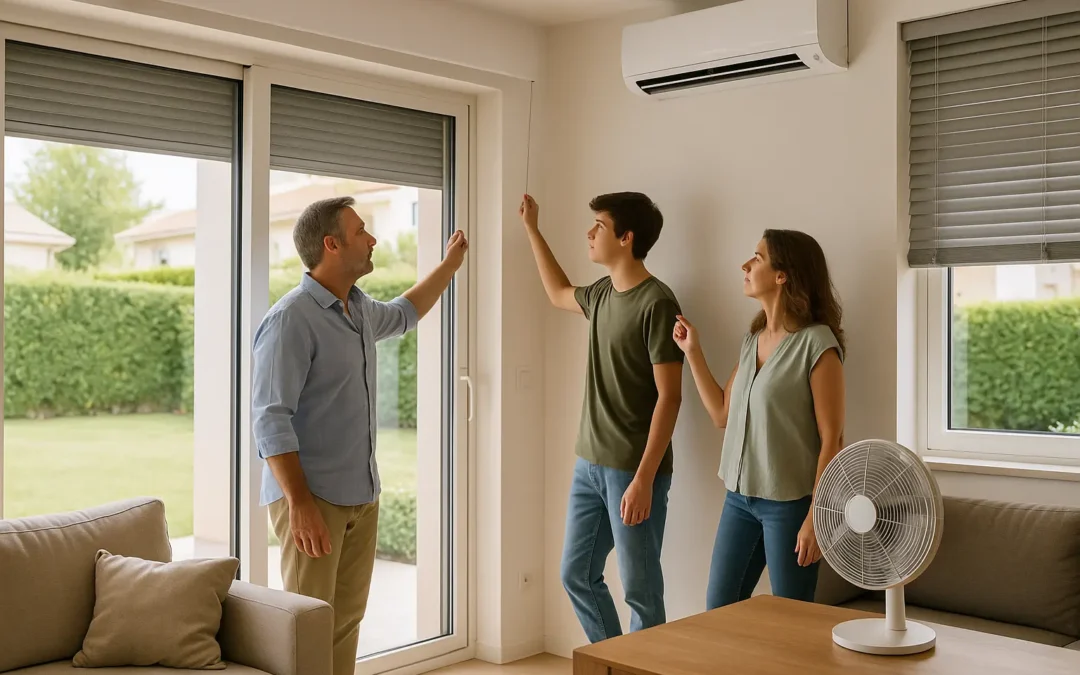
In addition to cool roofs, there are passive strategies that reduce demand before turning on climate control systems. Good insulation and airtightness of walls, roofs, doors, and windows decrease heat loss in winter and heat gain in summer. Between December and March, exterior shading, night and cross ventilation, and the use of fans allow indoor temperatures to drop with minimal consumption. Likewise, solar control films on windows can cut air conditioning consumption by 10% to 15%, says Ramírez.
The design of the thermal envelope—walls, roofs, and windows—is key to maintaining comfort throughout the year. Good insulation reduces heat flow, keeping warmth inside in winter and outside in summer.
“During the cooling season, it is essential to avoid direct solar radiation indoors; for this, external solar protection such as shutters, curtains, or sunshades is recommended. Additionally, the internal thermal mass of heavy walls, such as brick or concrete, helps eliminate excess heat through natural ventilation during cooler hours,” says Felipe Encinas, an academic at the UC School of Architecture.
Building orientation is also decisive. “A poorly oriented project—for example, one with heavy exposure to the afternoon sun—is difficult to correct later,” he adds.
To reduce overheating, passive cooling strategies are applied—some dependent on the initial design and others that can be incorporated after construction. Among the latter, the most effective are solar protection on windows and night ventilation. Encinas concludes that these measures must be implemented in an integrated manner, as they are not enough on their own to maintain thermal comfort in summer.