
Offshore Wind Power Generation: How Far Is the Country From Joining This Race?
March 2nd, 2026
The national coast possesses an enormous and yet untapped wind potential. Technological development costs, the lack of a specific regulatory framework, and the need for marine electrical infrastructure are some of the factors explaining the nascent progress.
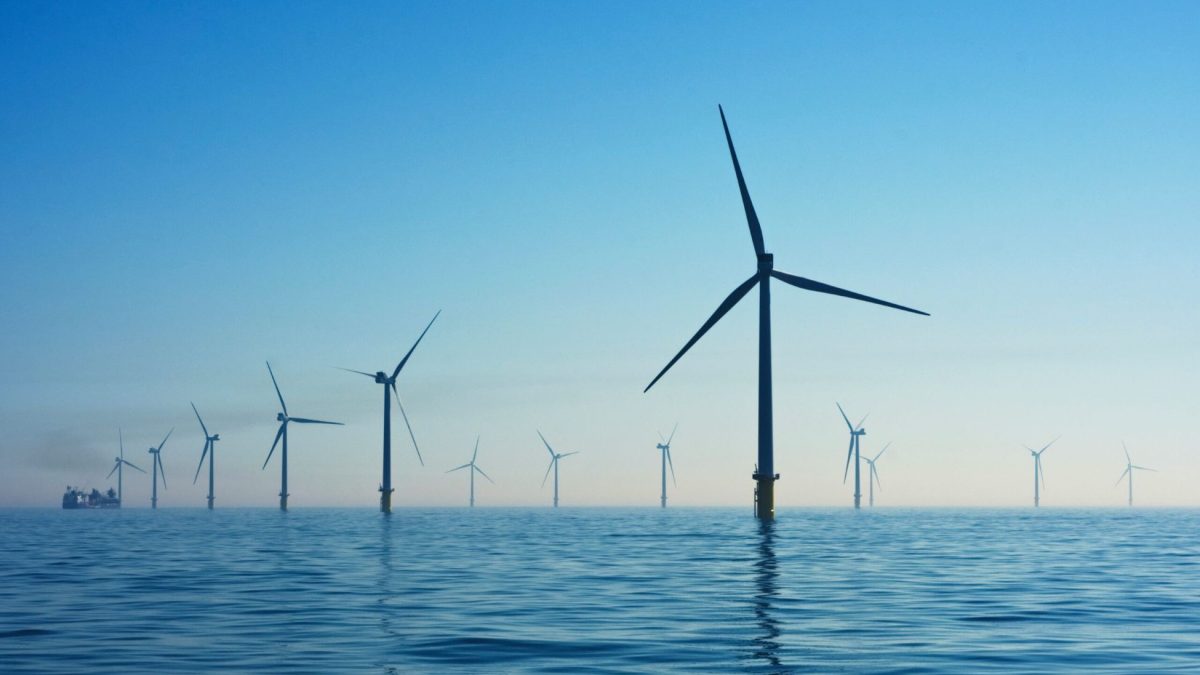
With more than 4,000 kilometers of coastline, Chile is emerging as a high-potential area for the development of offshore wind projects that could strengthen system security and advance decarbonization. This trend is known as offshore wind energy, and it consists of harnessing sea winds to generate clean and stable electricity.
The executive director of the Chilean Association of Renewable Energies and Storage (Acera), Ana Lía Rojas, ensures that the association perceives this type of generation as an opportunity for the country to “expand the renewable portfolio with a high-quality resource and seasonal and hourly complementarity,” which could also transform into a new industrial and logistical hub. However, she clarifies that its development faces significant and multidimensional challenges that explain the currently nascent progress.
“The great opportunity is not just generating electricity, but creating an economy that feeds—for example—the green hydrogen industry and modernizes aquaculture,” adds Daniel Salazar, managing partner of energiE, who agrees that it is a large-scale and long-term challenge.
Among the first steps toward the development of this industry, Karla Flores, director of InvestChile, highlights that during 2025 offshore wind generation was incorporated as part of the focus of the foreign direct investment promotion strategy. Additionally, she details that since August of last year, the country has been part of the Global Offshore Wind Alliance, an international organization that brings together leading countries in this sector and emerging economies to advance these renewable generation options.
“The Ministry of Energy has commissioned the World Bank to develop a roadmap to identify short-term priorities to make this industry viable, which will be delivered in March with recommendations to be addressed by the next administration,” Flores adds.
International Experience
Karla Flores, director of InvestChile, explains that this industry is mature in other countries with fixed-bottom solutions, primarily developed in the Nordic markets of Europe and parts of Asia. Regarding technology, she points out that today the focus is on floating solutions—still in pilot phases—and it is expected that they can be competitive with fixed solutions in the short term. Regarding the business model, she states that “international experience indicates that in all cases, State participation has been key to lowering development risks.”
For his part, Daniel Salazar, managing partner of energiE, highlights projects such as Hywind Tampen in Norway, which demonstrates that offshore wind development can power complex industrial operations. “Chile must learn that the key to success in Europe was not only technology, but regulatory stability,” the executive states.
Challenging Ecosystem
Although wind resources abound, “one must keep in mind that the exploitation of offshore wind energy involves greater technical and economic challenges than its onshore alternative,” says Carlos Silva, academic and researcher at the Center for Energy Transition (Centra) of the Faculty of Engineering and Sciences at Adolfo Ibáñez University. He explains that the marine environment is corrosive, which is “especially problematic” for technologies that use exposed metallic parts and sophisticated systems of moving parts.
In the same way, he notes that the country has large amounts of other renewable resources “with reasonable development costs,” so he estimates that energy project developers will continue to prioritize more economical and proven alternatives, such as solar photovoltaic, onshore wind, hydro, bioenergy, and even geothermal.
Rojas adds that the need for floating technology—less mature and more expensive globally—along with the country’s maritime conditions, complicates the design, installation, and operation of projects. She also warns about the need to develop marine electrical infrastructure, have a specific legal framework, and a clear mechanism for the allocation of maritime areas. In her view, the most important thing in the short term is to advance in enabling conditions, and she projects that, given the complexity of the projects, it is reasonable to think that the first commercial operations could materialize during the next decade.