Geely projects to double its sales and launch new models in Chile during 2026
March 2, 2026
The automaker, which has been operating directly in Chile since last year, projects doubling its sales in 2026 and plans to launch five new models locally this year, reinforcing its commitment to electromobility and SUVs.
The Chilean automotive market, while still far from recovering the highs of the last decade, is beginning to show signs of stabilization. According to the National Automotive Association of Chile (ANAC), 2025 closed with more than 310,000 new light and medium-duty vehicles sold, representing a 2.7% growth compared to 2024. “This is the first link in a recovery phase after several years of high economic volatility,” says Diego Mendoza, Secretary General of the association, in an interview with Forbes Chile.
In this scenario, one of the Asian brands that decided to deepen its commitment to the country is Geely. Since 2024, the Chinese-origin automaker has been operating directly in Chile—without the need for intermediaries—a move that reflects a greater commitment to the local market and is already translating into the first concrete results.
According to Martin Xu, General Manager of Geely Chile, the brand exceeded 4,053 units sold in 2025, a figure that surpassed initial projections and represented a 136% growth compared to the previous year. With this, it reached a market share of 1.3%, according to figures from ANAC. “Our focus is on building a solid base, strengthening the commercial network, and offering technologically differentiated products aligned with the demands of the Chilean consumer,” the executive states.
Electrification and Portfolio
Beyond volume, 2025 also marked a turning point in terms of portfolio. One of the milestones was the launch of the Geely EX5, the brand’s first 100% electric model in Chile. “Based on the GEA electric platform, it offers urban autonomy and fast charging. Our goal is to make electromobility an accessible reality, not a premium niche,” explains Xu.
In parallel, the Coolray SUV consolidated itself as the brand’s main commercial driver, currently accounting for 65% of its local sales. This is joined by the performance of other models such as the Okavango and Starray, which have contributed to diversifying the offer. In fact, Geely already reaches nearly 2.7% market share in the SUV segment, one of the most competitive in the Chilean market.
For Xu, this performance responds to a structural change in the local consumer. “Today, the Chilean buyer is more informed, digital, and demanding. They value technology, safety, functional design, and efficiency. The compact SUV and electrified vehicle segments are growing strongly, and that evolution aligns directly with our value proposition,” he maintains.
Commercial Expansion
Looking ahead to 2026, the company seeks to accelerate even further. Geely projects doubling its market share, surpassing 8,000 units sold, and launching five new models in Chile, which will be added to the seven currently available. The new offering will include hybrid and 100% electric alternatives.
Currently, the brand has more than 40 sales and after-sales points across the country, with the goal of exceeding 45 during 2026. In parallel, it is advancing in the transition from the traditional 3S model (Sales, Service, and Spare parts) toward a 4S format, which incorporates showrooms with brand experiences and digital tools for services and warranties. “Our goal is to position ourselves among the top ten automakers in Chile,” Xu affirms.
The executive acknowledges, however, that one of the greatest challenges is the intense price war facing the industry, driven by brands that still market vehicles with technologies prior to the Euro 6c standard. Faced with this, Geely rules out competing via aggressive discounts. “Our bet is on the value of the product,” he points out, adding that the average ticket—currently between $17 and $18 million CLP—could even increase in 2026.
A Sectoral Opportunity
From a broader perspective, Luis Gutiérrez, an academic at the Faculty of Engineering and Sciences of the Adolfo Ibáñez University (UAI), underlines that the Chilean automotive market is currently one of the most competitive in the region, with nearly 70 brands operating. “Chile is no longer in the stage of massification of the first car. Relevant growth is not in selling more vehicles, but in selling better cars: safer, more connected and, above all, cleaner,” states the researcher from the UAI Center for Energy Transition.
In this context, he highlights the role that Chinese brands have acquired. “Four out of ten new cars circulating today in Santiago are of Chinese origin. They stopped being just an economic alternative to become protagonists, with a very competitive price-technology ratio and international safety standards,” he notes.
From ANAC, Diego Mendoza agrees that the sector’s great challenge is to accelerate the renewal of the vehicle fleet. New cars sold in 2025 are, on average, 9.2% more efficient than those of the last decade, which has avoided at least 185,000 tons of CO2 since 2024. “That impact multiplies if we manage to retire the oldest and most polluting vehicles faster,” he says.
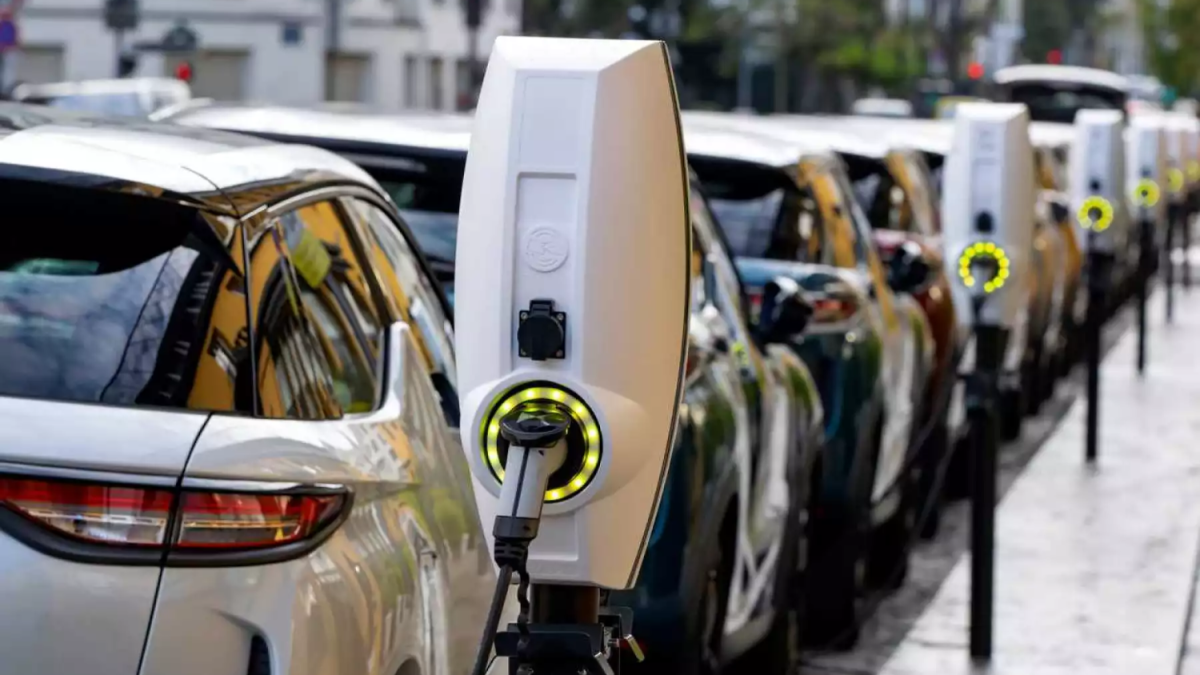
The second challenge, he adds, is to accompany the progress of electromobility with charging infrastructure, clear regulatory frameworks, and incentives that allow the transition to also reach the regions and middle segments. “It cannot be a transformation only for large fleets or high incomes,” he emphasizes.
In this scenario, Geely’s projected growth in Chile appears closely linked to a more favorable economic environment. “The perspectives for 2026 are better than those of 2025, with greater socio-political stability, strengthening of the Chilean peso, and an increase in foreign investment,” Xu concludes.